
Trace Former York County Property Owners
A chain of title grows one link at a time. Start with the current deed. It names the grantor who conveyed the parcel and usually cites an earlier instrument reference. Then find that earlier deed and read its grantor the same way. Record the transfer date, the parties, the instrument type, the book and page, and the full legal description at every step. A worksheet keeps each transfer tidy before the details blur.
| Transfer date | Grantor to grantee | Deed or instrument type | Book / page or file |
|---|---|---|---|
| Current conveyance | Read parties from the recorded instrument | Sale, fiduciary, or other deed | Copy the Clerk's exact reference |
| Prior transfer | Search the grantee as the next prior owner | Read the document category | Carry the prior instrument reference |
| Older book series | Follow the named grantor and grantee | Use the correct historical index | Write volume, page, and date |
| Plat link | Match the land description across transfers | Subdivision or specialty plat | Record plat book and page if given |
The legal description anchors everything. An old farm tract may predate today's lot numbers. When a deed cites a plat, pull that recorded map before moving to another party. Watch the parties as well. If the instrument names an executor, trustee, or commissioner, treat the transfer as a fiduciary or court event and check the matching estate or case record.
Walk the York County Deed Chain Backward
The Clerk's index works one transfer at a time. Search the current owner as grantee first. The grantor field reveals who conveyed the parcel. Then run that earlier name as grantor to catch the conveyance before it. Follow the legal description and the book reference instead. Never rely on a name alone. If nothing comes back, try both party roles, entity name variants, wider date ranges, and the historical series.
- Start with the current parcel, GPIN, legal description, and current owner record.
- Find the acquisition deed with the present owner as grantee.
- Copy its grantor, date, instrument type, and prior deed reference.
- Search the prior party as grantee and grantor, then repeat with the earlier instrument.
- When the modern index ends, switch to the matching old-book, microfilm, or plat series.
- Grantor and grantee
- The conveying party and receiving party in a land instrument.
- Chain of title
- The linked sequence of recorded transfers for the same land.
- Legal description
- The deed's land description, which can persist when a street name changes.
York County's Current Deed Stream Starts in 1953
York's current deed stream begins on August 1, 1953. That is the start date on the Clerk's SRA page for current Deeds and Land Records. An OLD DEED BOOKS row runs from 1753 through February 24, 1932. Another series spans 1910 through 1967. A later row covers 1957 through 1968. A gap at one date often signals the wrong series rather than a missing transfer.
Other groups start later still. Financing statements reach back to 1995. Judgments begin in 1985. Marriage licenses start in 1866, and wills and fiduciaries begin in 1967. A former-owner chain that crosses an estate or court sale may need a different index entirely.
The York Clerk's SRA coverage table lists the ranges.
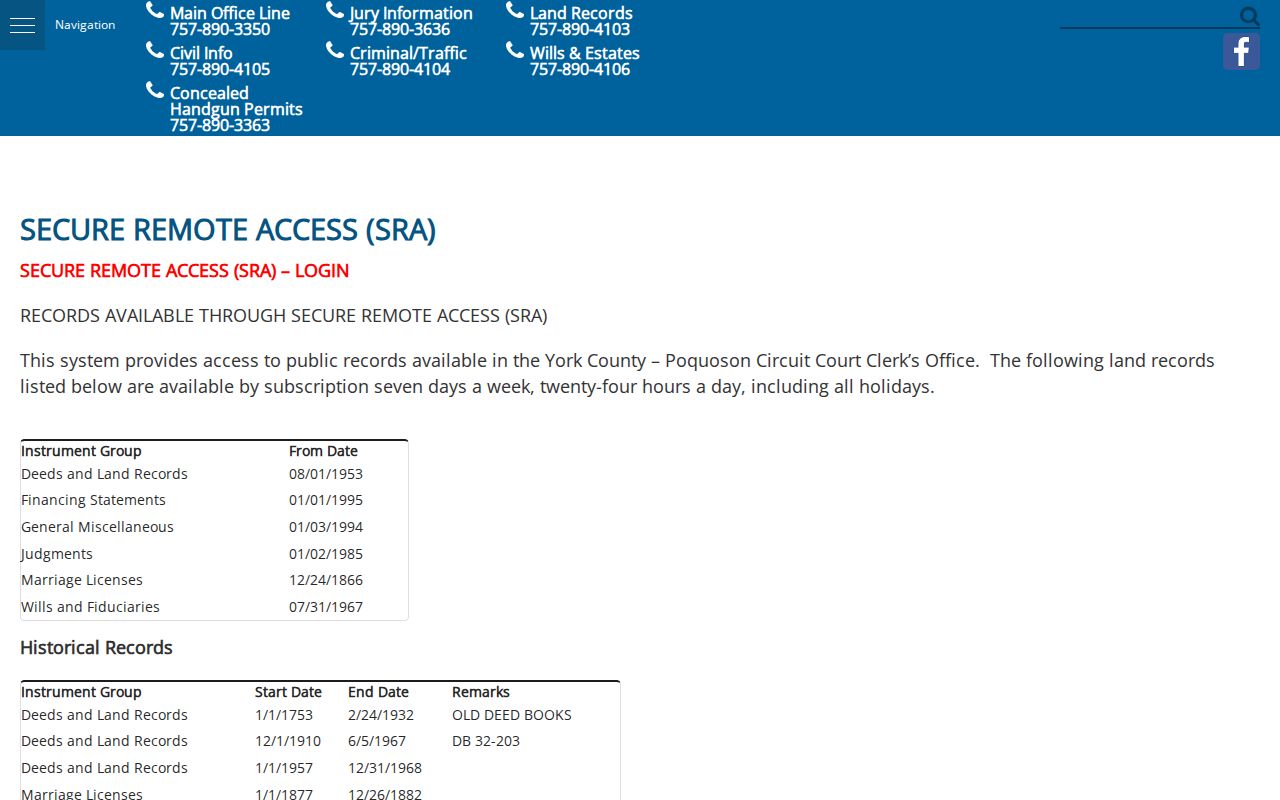
Check the series ranges first. An empty result may simply mean you searched the wrong record group, not that ownership broke.
How Far Back York County Ownership Records Reach
York's historic SRA table names an OLD DEED BOOKS series beginning in 1753. Not every page from that year appears in the modern search interface. The oldest line runs through 1932. Another series opens in 1910. Treat the history table as a map to indexes and books, then ask the Clerk which search mode or office copy fits the reference in hand.
The Library of Virginia's York collection goes deeper. An early deed and bond run covers 1701 to 1729. A General Index to Deeds spans 1777 to 1866. Grantor-grantee indexes reach through 1956, with later ranges beyond. One chain can therefore cross handwritten books, alphabetic indexes, microfilm, and current online data. No fire or flood explains a York record gap, so take a missing hit back to the relevant index instead of presuming a loss.
Lawful use. Use prior-owner records for house history, estate research, and property due diligence. Do not use them to track, threaten, or harass a living person.
York County Microfilm and Plat Books
The Library of Virginia catalog runs deep. Deed Book 6 covers 1777 to 1791. A general deed index spans 1777 to 1866. Alphabetic grantor and grantee ranges run from 1777 to 1956, with later index runs beyond. A Plat Book covers 1868 to 1951. Some entries carry interlibrary-loan or library-access notes, and a catalog line alone does not promise a digitized page you can view from home.
York also keeps oyster plat books. Three volumes cover 1892 to 1906, 1907 to 1934, and 1934 to 1954. They help with old waterfront parcels. A tract or water boundary may not match today's subdivision label, so match the instrument description to the plat and the current GIS map only after checking the intervening deeds and map references.
The York County guide from the Library of Virginia describes the microfilm holdings.
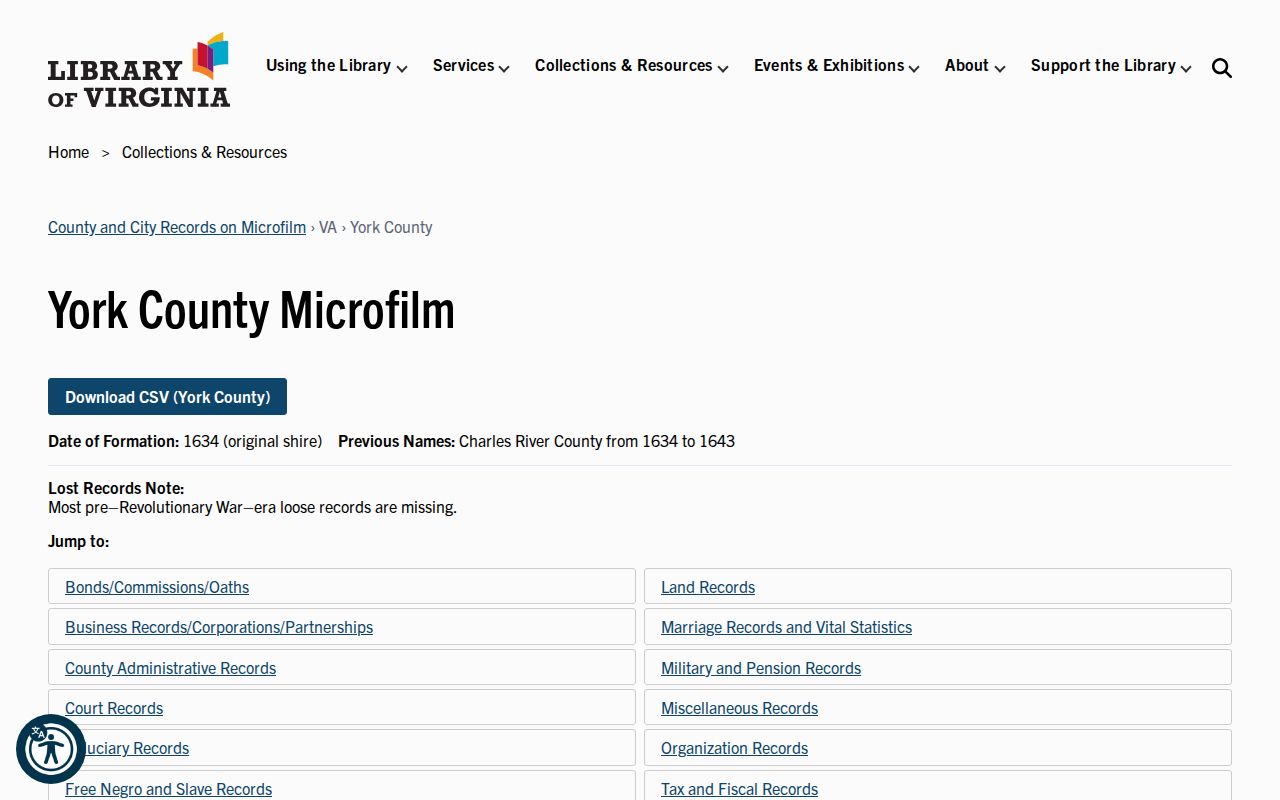
Ask the York County Library or Clerk first for the exact volume and access path before any archive visit.
Former York County Owners Need Name Variants
Older grantor-grantee indexes rarely agree on name forms. An entry may show initials. It may also show a prior surname, an inverted order, or a shortened company style. Try each person in both roles. Run company names with and without punctuation. For an estate search, try the decedent, “Estate of,” and the executor or administrator. The deed index sorts by party name and instrument category. A change from individual to trustee can therefore interrupt a simple surname search.
Match every result to the parcel before trusting it. The lot, tract, or prior deed reference must match. A common name can belong to more than one York County owner. Only after trying name variants, role changes, wider dates, and the historical index does a no-result mean much. Even then, a gap in the search is not proof that title skipped a generation.
Estate and Court Transfers Break a Simple Chain
A simple parent-to-child chain often hides a fiduciary. Probate, partition, foreclosure, and court sales explain these breaks. York's deed categories include AFFAD HEIR and related instruments. The Wills and Fiduciaries index reaches back to 1967 in the SRA coverage table. Search the estate or decedent there first. Then hunt the land records for an executor's deed, administrator's deed, commissioner's deed, distribution, or later confirmation.
A Virginia death record fixes a date, but it conveys no land. VDH certificates open to the public after 25 years. Earlier access is limited and generally requires eligible family status plus identification. Rely on the probate file and the recorded conveyance, not the certificate alone, since the Virginia vital-records page explains the public opening period.
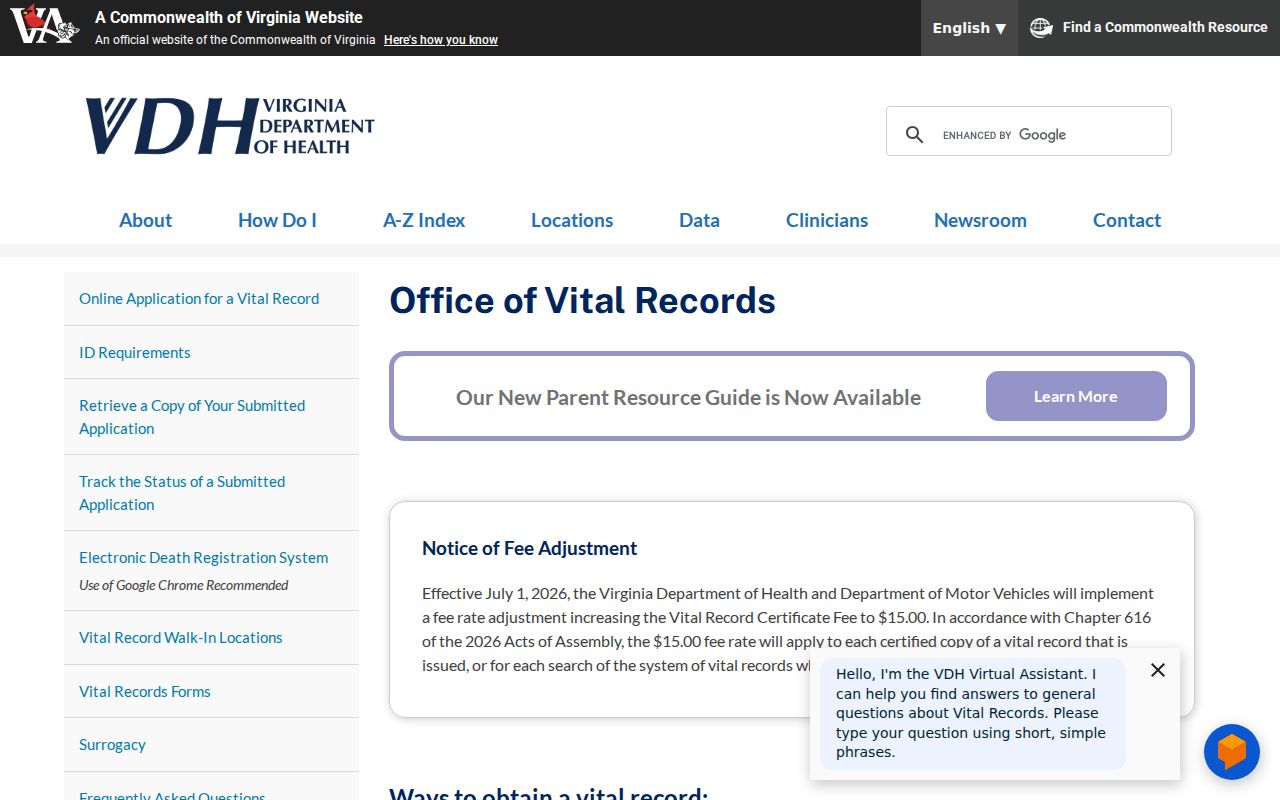
The certificate gives identity; the deed proves the transfer.
Use York County's Index as a Backward Tool
The online index gives you several ways in. Sorting runs by date or name, with a human or company entity choice, instrument categories, grantor and grantee boxes, a date range, book-page or file number, and instrument number. Work the chain backward. Search the current owner as grantee first, then each earlier name as grantee for the acquisition that brought the land. The grantor side shows the later conveyance out. Book and instrument fields confirm the same document. The York County index landing page warns that online records are a convenience and may still be processing.
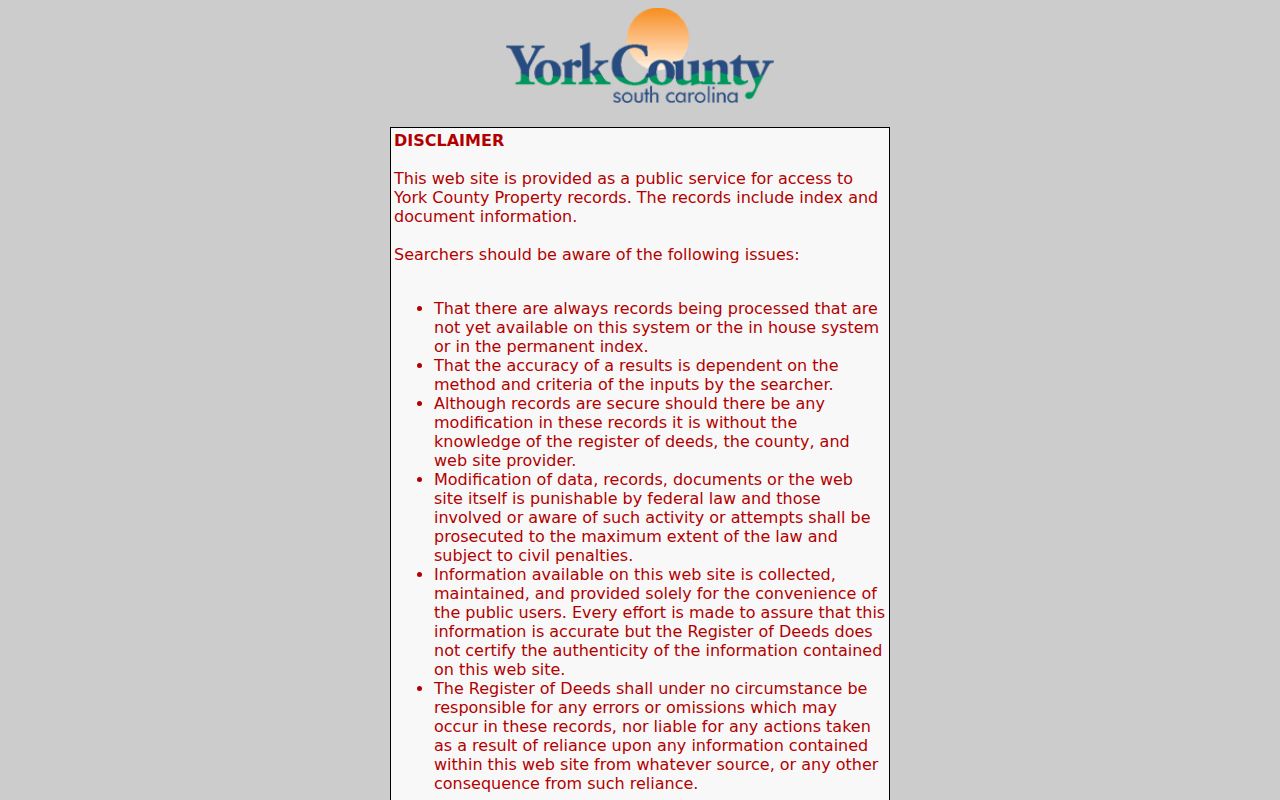
Use the index to find a filing. For the land details, rely on the recorded instrument and its legal description.
When a Former Owner Is Offline
Some names and images never make it online. The Clerk's public terminal, historical search mode, deed books, and copy requests cover those gaps. The office keeps weekday hours, and deed recording ends at 3:45 p.m. Ask before you travel. Confirm the book series, image availability, and the copy charge in one call. SRA lists a $50 monthly subscription per user. That fee buys remote access, not images. Older titles? Try the Library of Virginia. Its guide and microfilm respond best to requests naming the exact prior party, date range, book reference, and land description. For one deed image or certified copy, use the deed-copy process; the former-owner task is rebuilding the linked transfers.